I have seen the design of a project very interesting. The project is about the potential relationship between psychology and architecture, using psychological matrix to generate architectural forms, using architecture as an instrument, an investigate tool to express things.
Built on the theory of the Five Factor Model (FFM), there are five dimensions for personality traits: Extraversion, NeuroticismConscientiousness, Agreeableness, Openness. Each dimension has a high score and low score which makes the total ten. For instance, the high score for extraversion is outgoing and low score is aloof.
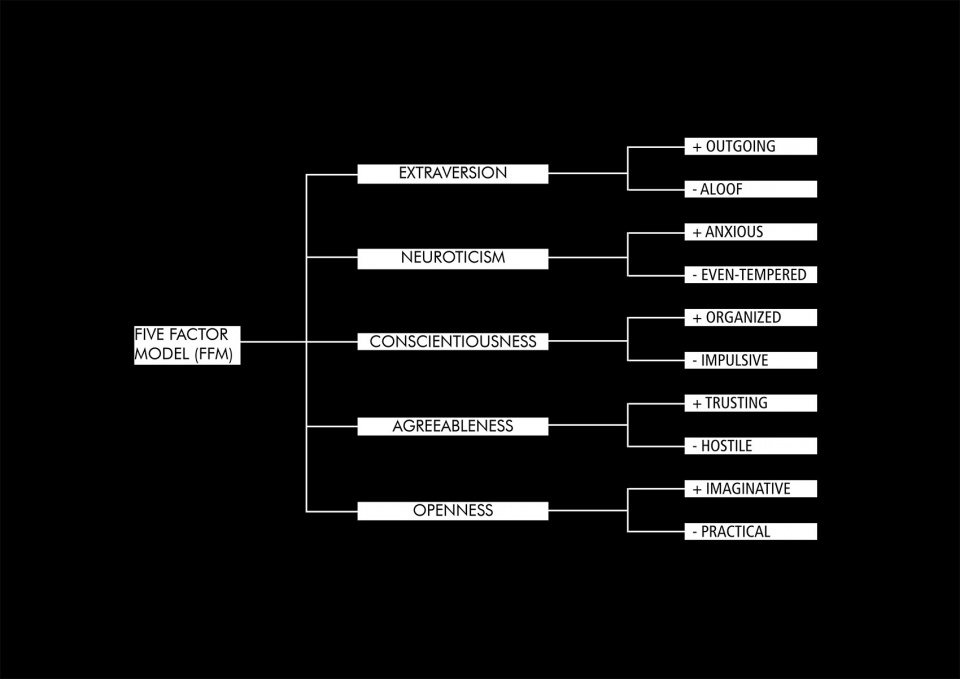
Base on the theory, she built a book call The Architecture Personality Handbook, which consists mostly of the description for each of the ten personalities and the architecture forms generated out of them. It’s an introduction and analysis on personality traits and how architecture form can interact with them.
1.OUTGOING
“She organizes a party every week, for a birthday or for nothing.
Talkative, she is always the centre of attention.
She told her friend that she took a French course simply because French men are attractive.
Besides being a party animal, she is also a workaholic.
She loves travelling and hiking.
Lower-case letters are simply insufficient to describe her response to her hiking experiences: “I LOVE to take deep breathe for the fresh air!”
2.ALOOF
“He is not excited when gets a job and not sad when loses it.
He has a stable work, not so well-paid, but not so exhausted as well.
He is deeply short-sighted because he reads too much.
Sometimes he watches his goldfishes swimming for hours.
Gardening is his routine on weekend.”
3.ANXIOUS
“She weeps at every sad movie.
She visits her doctors more than others and rates her health as worse.
She is quick to detect an angry face.
She can’t eat and sleep and loses weight rapidly for the littlest thing.
She blames herself a lot and thinks no one loves her.
She takes a series of different antidepressants.
She has suicidal thoughts every now and then.
Sometimes she mishears “die” for “dye”, or “pain” for “pane”.
4.EVEN-TEMPERED
“He listens more than he talks.
When bad things happen, he takes it easy and looks at the bright side.
He doesn’t expect too much and thus is not easily surprised.
He sleeps soundly even under great pressure.
He knows that he is imperfect, and he embraces it.”
5.ORGANIZED
“She always goes to sleep unvaryingly at 10:37 p.m.
She reads thirty pages before bed every day.
She is punctual for every event.
She always crosses the road with the light.
She is unable to throw anything away.
If she takes time to do nothing, she feels wasteful and lazy.
She is highly valued at work because of her attention to detail.
She is, however, also the least productive worker in the office. ”
6.IMPULSIVE
“He starts things right before the deadline.
But eventually, he gets through whatever academic and professional challenges he meets.
He says to himself:” this is my last cigarette“ ten times a day.
He has several expired gym cards.
He never makes plans for travel.”
7.TRUSTING
“She gives blood,donates to charity.
She returns lost wallets, gives directions to strangers in the street.
She is slow to anger and quick to forgive.
She adopts two stray dogs, three stray cats and leaves food on the balcony for birds.”
8.HOSTILE
“He feels that he is more important than everyone else.
He does not care to help people.
He has no desire to improve interpersonal relationships.
He is not good at decoding the mental states underlying the words.
He finds human company rather boring most of the time and prefers to be on his own so that he has the freedom to let his thoughts go the way he wants them to.”
9.IMAGINATIVE
“He loves participating in artistic and cultural activities of all kinds-reading, galleries, theatre and music.
He has tried out many different jobs, philosophies, and lifestyles.
He challenges social norms.
He is on a continual quest for self-expression.
He intends to associate many remote domains, potentially leading to bizarre, improbable beliefs of no practical use.”
10.PRACTICAL
“She takes the same coffee every day.
Her schedule is detailed to minute.
She enjoys working with numbers.
She never steps out her country.
She is resistant to the era of information explosion.”
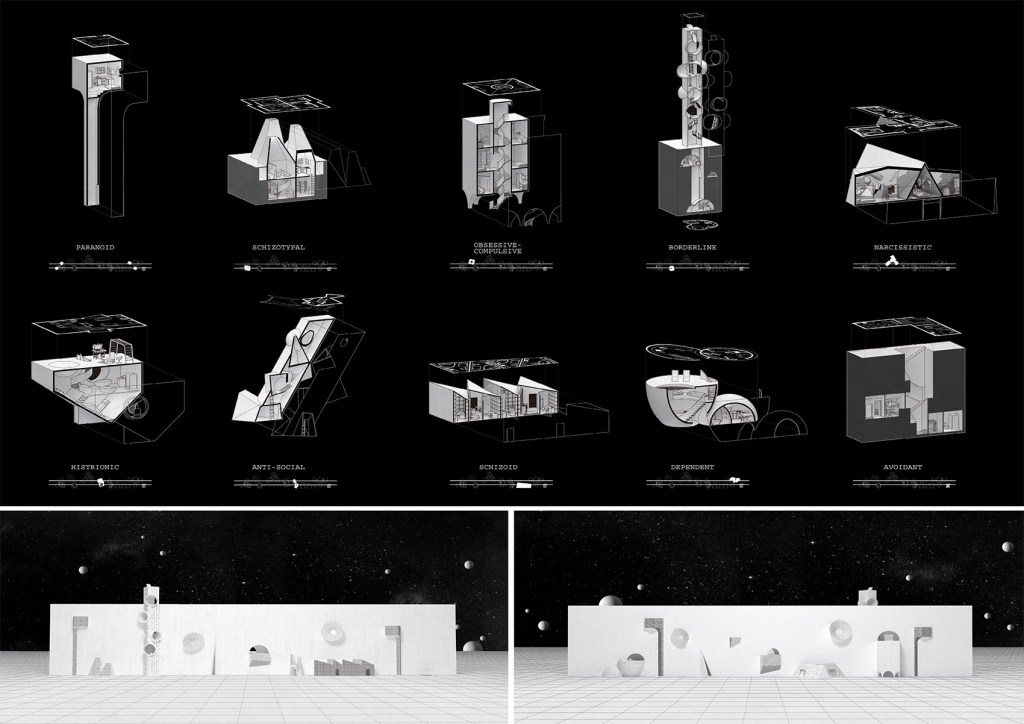
Built on the theory of Diagnostic and Statistical Manual of Mental Disorders (DSM). There is a close relationship between the Five-Factor Model of personality and personality disorders. For example, extreme high score in consciousness leads to objective compulsive personality disorder, or extreme high neuroticism leads to avoidant personality.
 Alida's blog