In terms of global pollution, the Spanish art group Luzinterruptus has been at the forefront and central position in combating pollution in ecosystems and plastics that threaten Pacific marine life. Through the installation of a large number of plastic bottles, Luzinterruptus has raised awareness of the use of plastics worldwide. The art group Luzinterruptus launched their latest installation on the Plaza Mayor in Madrid, featuring “labyrinth” plastic waste.
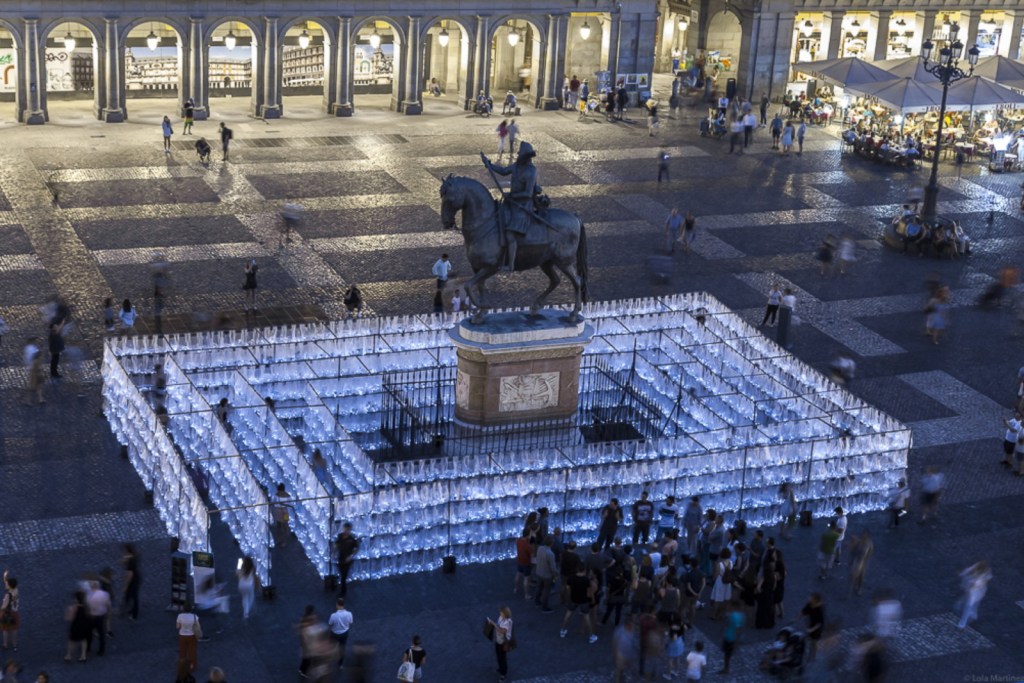
As an extension of the public art project, the work continues the public art they created at the 2014 Katowice Street Art Festival in Poland, but it is bigger and more claustrophobic. The waste maze is made up of approximately 150,000 discarded water bottles. The design team spent a whole month collecting plastic bottles. They wanted to use an intuitive way to make people realize how much waste we generate every day. In order to create a maze, they piled up 7 bottles with a height of 5 meters. The maze consists of corridors and paths that participants can experience on foot. However, before putting the maze together, the bottle needs to be cleaned and placed in a transparent polyethylene bag with LED lights. The large structure of this maze is a metal structure composed of reusable components. Then hang these bags on this metal structure. During the day, the sunlight will be reflected from the bottle, but the most exciting thing is that it happens at night, when the luminous LED lights will become the luminous equipment of the entire maze.
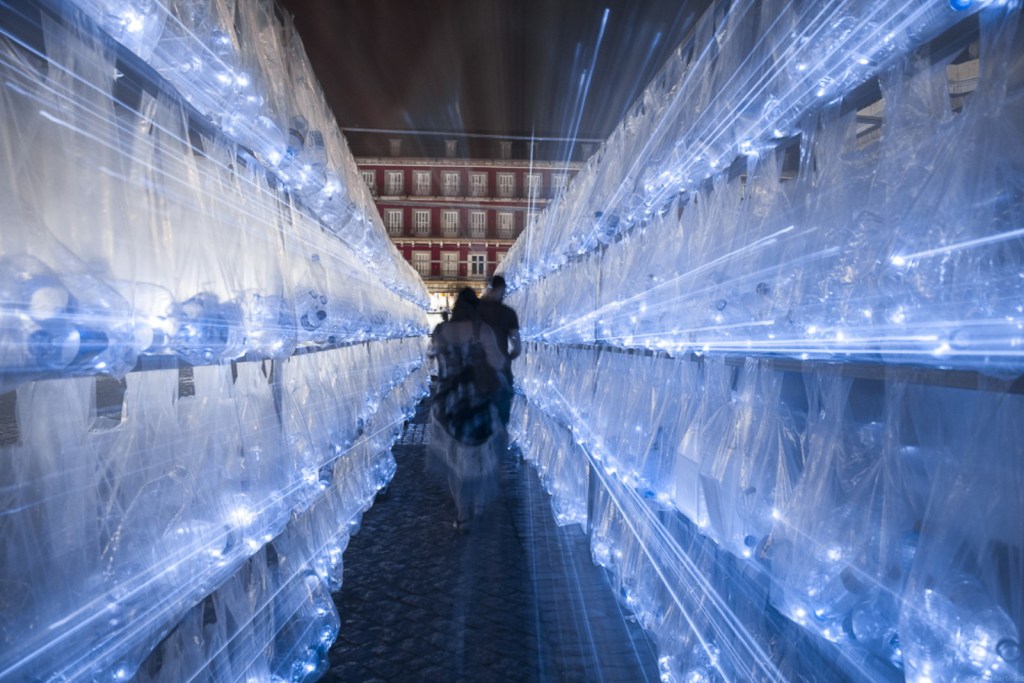
According to a report from the Ellen MacArthur Foundation: “By convention, there will be more plastic than fish by 2025, and every three tons of fish in the ocean will contain one ton of plastic.” And after this exhibition, the labyrinth maze can be dismantled, and the bottles used to make the labyrinth are properly recycled to encourage individuals to pay more attention to recycling and global pollution. On the contrary, the design team explained that “it doesn’t matter whether the installation looks good, we just want to make the public feel uncomfortable when they go in.” So, they deliberately laid out complex paths in the maze, and the pedestrian pathways were designed to be extremely narrow and forced People keep turning, which gives people a sense of disorientation when there is no reference point. Coupled with the heat and unpleasant smell generated by a large amount of plastic, all this will only exacerbate this depressed feeling. This sense of oppression may be the most real feeling when nature digests these wastes!
 Alida's blog